Why Precision Engineering Businesses Should Measure Their IT Like They Measure Their Components
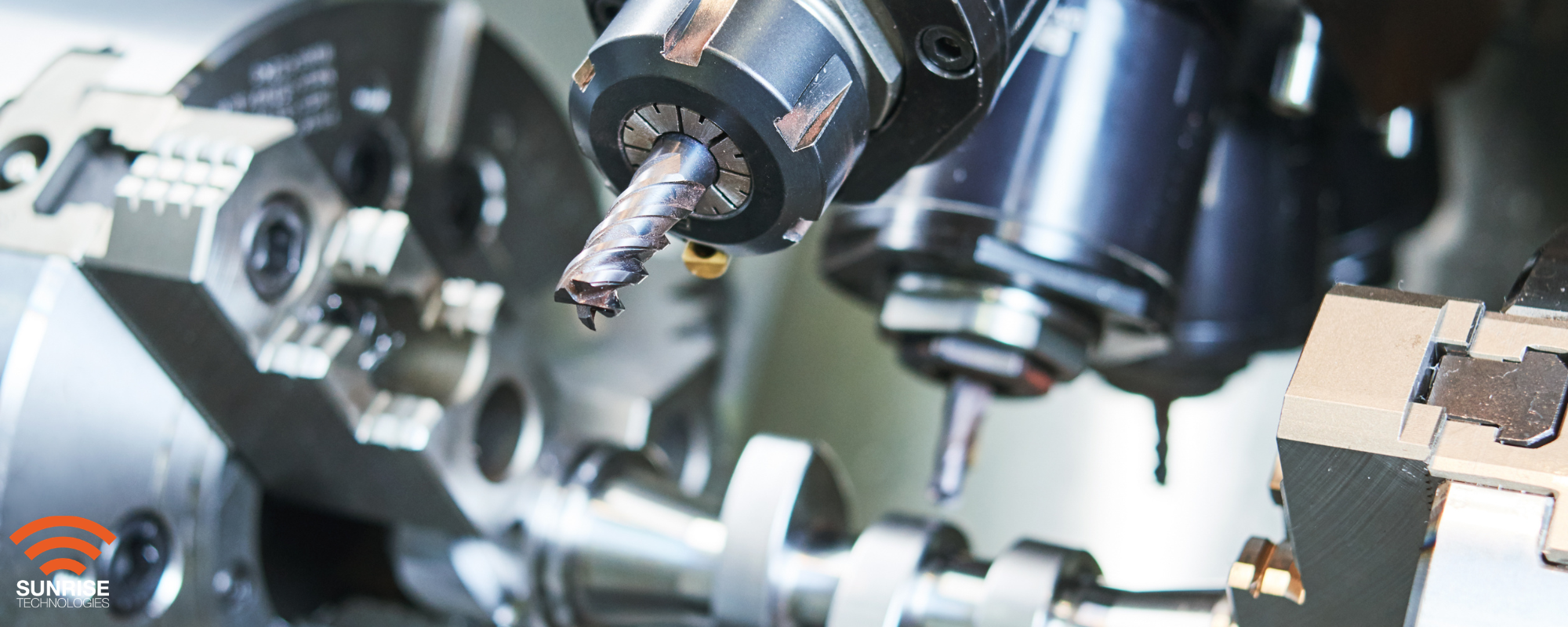
In Engineering, Nothing Is Left to Assumption Imagine you've just finished machining a critical component. It looks perfect. The finish is excellent. There are no visible defects. Would you send it straight to your customer?
Of course not.
Every engineering business understands that appearance isn't enough. Before a component leaves the workshop, it is measured, inspected and validated against a defined specification.
A difference of just a few microns can mean the difference between acceptance and rejection.
That's why manufacturers invest in:
First Article Inspection (FAI)
CMM Inspection
Capability Studies
PPAP Documentation
Dimensional Reports
Continuous Quality Control
The objective isn't simply to find faults.
It's to prove that what has been manufactured still performs exactly as intended.
IT Is No Different
Your IT infrastructure is just another production system.
Instead of machined components, you're relying on:
Servers
Firewalls
Wi-Fi
User accounts
Business backups
These systems are just as critical to production as the machinery on your shop floor.
Yet many businesses manage them very differently.
The Problem With Reactive IT
Imagine applying reactive thinking to manufacturing.
"We'll measure the part once the customer complains."
"We'll inspect the batch after production."
"We'll calibrate the machine when it breaks."
It sounds ridiculous.
But that's exactly how many businesses approach their IT.
Their provider waits until:
Something stops working.
Someone raises a support ticket.
A server fails.
A cyber attack happens.
A backup won't restore.
Only then does the investigation begin.
Engineering Understands Drift
Every engineer knows that systems drift. Machines wear. Tooling degrades. Processes change. Tolerance slowly moves away from specification.
That's why measurements happen continuously.
Not because something has failed.
Because you want to stop failure happening in the first place.
IT Environments Drift Too
Technology behaves exactly the same way.
Over time:
New employees join.
Old accounts remain active.
Security settings change.
Software becomes outdated.
Backup jobs fail.
Devices reach end of support.
Cyber threats evolve.
Business requirements change.
Nothing dramatic happens overnight. But month after month, your IT environment slowly moves away from best practice.
Without regular review, these changes often go unnoticed until they become expensive.
Measuring IT Instead of Guessing
This is where proactive IT support changes the conversation.
At Sunrise Technologies, we don't simply wait for problems.
We measure your technology environment against recognised standards.
Much like comparing a machined component to its engineering drawing, we compare your IT infrastructure against:
Cybersecurity best practice
Vendor recommendations
Business objectives
Compliance requirements
Industry standards
Operational resilience
Our Technical Alignment Manager (TAM) and Virtual CIO (vCIO) framework continuously assesses whether your technology is still aligned with where your business needs to be.
Every Review Should Answer These Questions
Rather than asking:
"Has anything broken?"
We ask:
Is your business becoming more secure?
Has your cyber risk increased?
Are your backups still working?
Are your systems still supported?
Is Microsoft 365 configured correctly?
Have compliance requirements changed?
Is your technology helping the business grow?
These are the questions that reduce risk before it becomes downtime.
The Cost of Not Measuring
Engineering businesses already understand the consequences of skipping inspection. Defects aren't always obvious. Problems often remain hidden until the final stages of production, where they're far more expensive to correct.
IT follows exactly the same pattern.
When technology isn't reviewed regularly:
Cybersecurity weaknesses develop.
Backup failures go unnoticed.
Unsupported software increases business risk.
Compliance gaps appear.
Performance gradually declines.
By the time the issue becomes visible, recovery is usually more expensive than prevention.
One Simple Question
You would never send a precision-engineered component to a customer without measuring it first.
So why would you trust your business-critical IT without measuring it?
When was the last time your technology environment was reviewed against recognised best practice?
And more importantly...
Does your current IT provider measure your IT, or simply fix it when it breaks?
Precision Creates Performance
Engineering organisations don't succeed because they react quickly to defects. They succeed because they prevent defects from reaching production.
We believe IT should follow the same philosophy.
Technology shouldn't simply be repaired. It should be measured, reviewed and continuously improved. Because the businesses that experience the least downtime, the strongest cybersecurity and the greatest resilience are rarely the ones with the fastest response times.
They're the ones that never needed to make the call in the first place.
Your Free Business IT Risk Assessment
If you're unsure whether your IT environment is still aligned with best practice, our Business IT Risk Assessment is a great place to start.
We'll assess your technology against recognised security and operational standards, identify potential risks and provide practical recommendations to help improve resilience, productivity and compliance.